


Home / SEO Service Areas
Find SEO Services by State and City
- Browse SEO service areas across the United States
- Find state and city pages built around geographic intent
- Connect location visibility with relevant SEO services
- Request a quote from the page that matches your market
Free Local SEO Quote
Tell us about your business, website, and target locations. Our team will contact you to discuss the SEO work and service areas that fit your goals.
- Your details are used to respond to this request.
See How Our Location-Based SEO Strategy Works
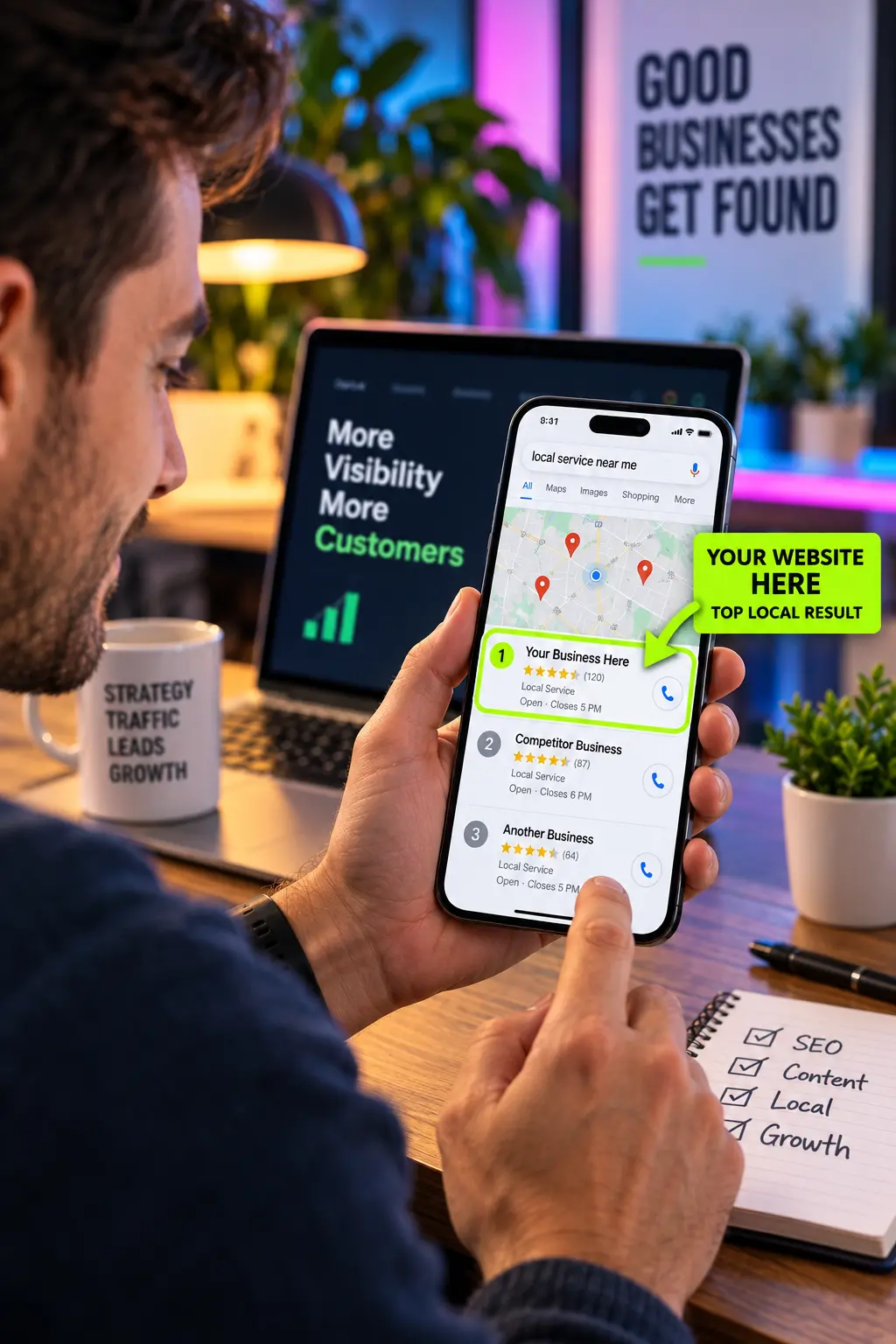
Build Local Search Visibility Across U.S. Markets
- Organize state and city pages around genuine service coverage
- Support Google Maps and local 3-pack visibility with accurate signals
- Strengthen citations, business information, and location relevance
- Keep national, state, and city search intent clearly separated
How We Build Local SEO and Map Pack Visibility
Our local SEO services begin with an audit of the website, location structure, Google Business Profile, business categories, services, hours, contact details, citations, reviews, and existing local rankings. We determine whether customers visit a location, whether the company travels to them, or whether services are delivered remotely. That distinction affects what the website can claim and how location pages should be organized.
We then map important services to the states and cities where the business can genuinely fulfill them. A state page summarizes statewide coverage; a city page answers city-level questions and connects to nearby communities where useful. We avoid thin doorway pages and unsupported location claims. For eligible businesses, Google Business Profile optimization can improve relevance and completeness, while consistent NAP information, local citations, review management, service descriptions, and locally useful content reinforce trust.
Map pack rankings depend on relevance, distance, prominence, competition, and the searcher’s location, so no agency can promise a fixed position everywhere. We focus on controllable work: accurate profiles, better landing pages, useful internal links, local competitor analysis, conversion tracking, and ongoing measurement. Google’s guidance on improving local ranking explains the importance of complete information, relevance, distance, and prominence.
Turn Search Intent Into Useful, Optimized Pages
Effective SEO services across the United States require more than inserting a place name. Each important URL needs a defined search intent, a primary keyword, supporting semantic terms, useful answers, and a conversion path. We use keyword research and competitor analysis to decide whether a query belongs on the national service page, this geographic hub, a state page, a city page, or a specialized SEO service page.
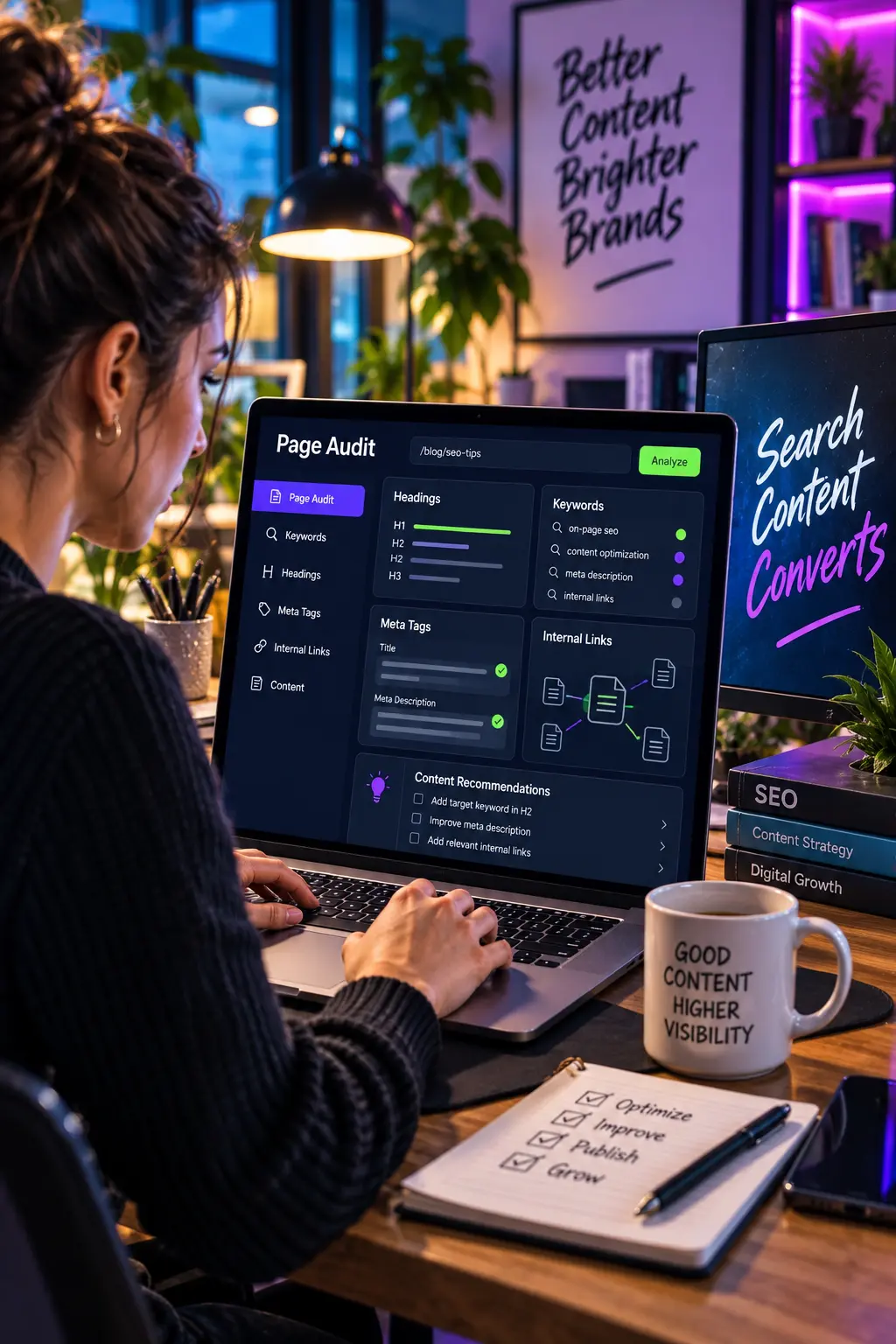
On-page SEO aligns title tags, meta descriptions, headings, body copy, internal links, image metadata, structured information, and calls to action. Content is written for people first, while still making the subject, service, location, and relationship between pages easy for search engines and AI systems to understand.
- Map one primary intent and supporting keyword cluster to each URL
- Use titles, H1s, H2s, copy, image attributes, and anchors naturally
- Connect location pages to relevant SEO service pages
- Measure calls, forms, bookings, and qualified opportunities
What Our SEO Process and On-Page Work Includes
Our process starts with discovery, analytics review, keyword research, search-intent classification, competitive page analysis, and a technical baseline. We group related searches into practical clusters and assign each cluster to the strongest destination. This prevents the national SEO services page, the geographic hub, state pages, city pages, and supporting services from unintentionally targeting the same term.
Implementation may include on-page SEO services, title and meta improvements, H1 and H2 hierarchy, content optimization, semantic keyword coverage, image alt text, descriptive internal anchors, FAQ content, schema coordination, and clearer conversion elements. Our SEO content strategy services organize future pages around customer questions and business priorities rather than publishing disconnected articles.
We do not force a fixed keyword density or repeat exact phrases until the copy becomes unnatural. The primary topic appears in prominent places, related language expands relevance, and every section must help the reader understand the service or make a decision. After publication, we review indexing, impressions, clicks, engagement, form submissions, calls, and lead quality. Those signals guide revisions and expansion.

Make Every Important Page Crawlable, Fast, and Clear
Thousands of useful location pages cannot perform if search engines struggle to crawl the site or determine which URLs deserve indexing. Technical SEO establishes a clean hierarchy from the country hub to states, cities, and service pages, supported by crawlable links, consistent canonicals, XML sitemaps, mobile usability, secure delivery, and practical page speed improvements.
We monitor index coverage and publish location clusters in controlled phases. Pages must provide genuine value, remain reachable through internal links, and avoid duplicate or near-duplicate copy. This protects crawl resources and keeps the site focused as its geographic footprint grows.
- Audit crawling, indexing, canonicals, redirects, and sitemaps
- Improve mobile usability, speed, and Core Web Vitals
- Keep templates consistent without producing duplicate content
- Monitor index coverage before expanding location clusters
How Technical SEO Supports Pages at Scale
Our technical SEO services review robots directives, XML sitemaps, canonical tags, redirect chains, broken links, HTTP status codes, JavaScript rendering, mobile behavior, Core Web Vitals, image delivery, structured data, and analytics. We also inspect hierarchy and click depth so country, state, city, and service pages can be discovered through ordinary links rather than relying only on a sitemap.
For a programmatic location system, quality control is part of technical SEO. Each generated record needs a valid slug, parent, title, location, unique content inputs, internal-link targets, map value, metadata, and schema fields. Pages with insufficient evidence should remain unpublished or noindexed until they meet the quality threshold. Nearby-city links should be calculated from real geography and inserted as permanent links.
Performance work is prioritized by user impact. We compress and size images, limit unnecessary scripts, reduce layout shifts, improve caching, and test templates on mobile. Google Search Console and analytics then show whether pages are discovered, indexed, earning impressions, and producing useful actions. Expansion follows evidence rather than an arbitrary page count.
Build Authority for Search Engines and AI Answers
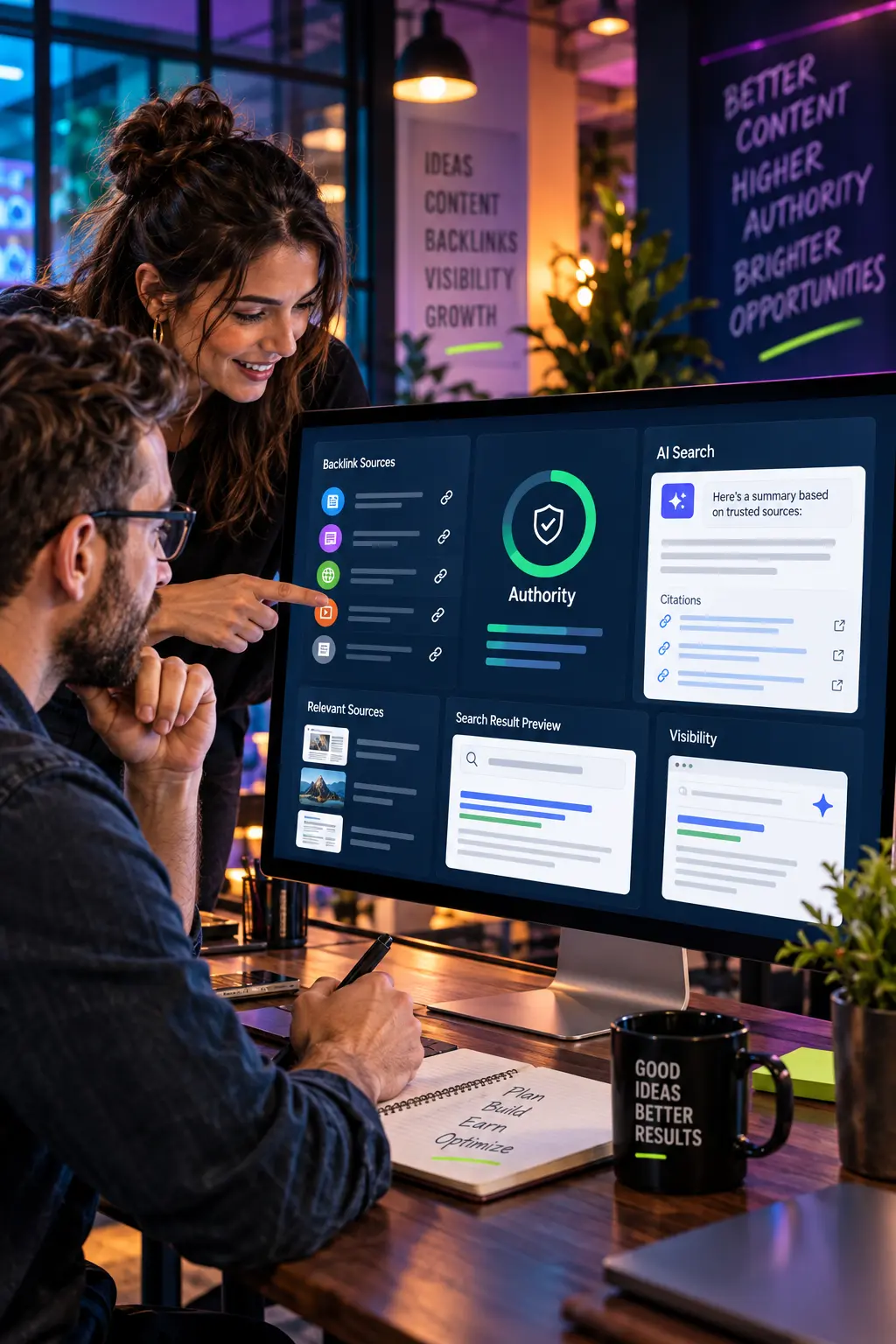
Strong pages need signals beyond their own copy. Relevant backlinks, trustworthy citations, digital PR, useful resources, and consistent brand information help search engines evaluate authority. Internally, the country hub distributes context to state pages, state hubs connect their cities, nearby cities reinforce geographic clusters, and service pages explain specialized expertise.
We also structure content for generative engine optimization (GEO), answer engine optimization, Google AI Overviews, ChatGPT, Perplexity, and other AI search experiences. Clear definitions, direct answers, credible sources, entity consistency, and original business evidence make content easier to interpret and cite.
- Earn relevant backlinks and referring domains instead of bulk links
- Use descriptive internal anchors across services and service areas
- Create answer-ready content with credible external sources
- Track organic rankings, AI visibility, citations, and qualified leads
Our Backlink, Authority, GEO, and AI Search Approach
Backlink strategy begins with relevance and editorial value. We look for opportunities through industry associations, local organizations, supplier and partner relationships, useful resources, digital PR, expert contributions, sponsorships, and genuinely newsworthy business activity. Local backlinks and citations can strengthen geographic context, while authoritative industry links can reinforce service expertise. We do not rely on automated link packages or irrelevant directories that create risk without customer value.
Internal authority is organized deliberately. This hub links to state service areas; state hubs link to every published city; city pages link back to the state, selected nearby communities, and the most relevant service pages. Specialized URLs such as on-page SEO, technical SEO, local SEO, and SEO content strategy receive contextual links only where they help the reader.
For GEO and AI search optimization, we use answer-first passages, clear entities, logical headings, lists, FAQs, source attribution, and facts that can be verified. Original case studies, expert review, transparent authorship, and updated information are more valuable than simply adding “AI” keywords. The result is a connected authority system designed for traditional organic results, map-based discovery, and emerging AI-generated answers.
Find SEO Services in Your State
Choose a state to explore its SEO service areas, published city pages, and local coverage.
Higher Rankings
Get found for searches related to the services you offer.
More Website Traffic
Attract qualified visitors who need your services.
More Local Customers
Turn local searches into real business opportunities.
Measurable Results
Track enquiries with clear reporting and practical next steps.
Questions About SEO Services by State and City
Do you provide SEO services throughout the United States?
Yes. Premius Marketing works with U.S. businesses through online communication and collaboration. The geographic plan should match the places the business actually serves, whether that means one community, several locations, a regional territory, or customers throughout the country.
This country page organizes the state and city directory. The main SEO services page explains the national service offer, process, and deliverables.
What is the difference between the SEO services page and this service-area page?
The SEO services page is the main commercial page for the complete service. It explains what the work includes and helps a business evaluate the offer.
This page organizes SEO service areas by state and city. Its job is to guide visitors to the geographic page that matches where they operate or want to reach customers.
What is the difference between local SEO and national SEO?
Local SEO focuses on searches tied to a particular community or service area. It can involve location pages, accurate business information, locally relevant service content, and an eligible Google Business Profile.
National SEO addresses broader searches without relying on one local market. Some businesses need both approaches, with separate pages and internal links for each search intent.
Does every city need its own SEO page?
No. A city page should exist when the business genuinely serves that location and can provide useful information for customers there. A page created only by replacing one city name with another adds little value.
We prioritize locations using business coverage, demand, competition, lead value, and the amount of reliable local information available for the page.
How long does SEO usually take?
SEO generally requires sustained work over several months. Timing varies with the website’s current condition, the competitiveness of the searches, the strength of competing pages, and the amount of technical or content work required.
We establish a baseline, track useful search and conversion signals, and use the findings to decide what should be improved next.
Can you guarantee a first-place Google ranking?
No agency controls Google’s search results, so we do not guarantee a particular ranking. We can define the work, improve the website and location content, document what has changed, and measure progress against the searches and customer actions that matter to the business.

Ready To Grow?
Let’s Grow Your Business With SEO
This site is protected by reCAPTCHA and the Google Privacy Policy and Terms of Service apply.